Driving tools
Driving is a free-forming process for materials and is one of the forming processes for metals.
By working with a hammer, dies, on a leather bag or using chasing pitch, different shapes can be created.


Featuring various working surfaces, milled and hardened from tool steel; leveling surface, V-block, bending edges, forming grooves, dishing depressions, boreholes, square mounting sockets (20 x 20 and 28 x 28); Dimensions: 120 x 120 x 120 mm, 10 kg, burnished finish. Back in Stock! Features: Milled from tool steel Hardened for long service life Blackened (burnished) finish Compact dimensions Working Surfaces: Flattening surface: 120 x 120 mm, flat 1x Square socket: 20 x 20 mm 1x Square socket: 28 x 28 mm Square sockets feature spring-loaded plates 90° V-groove (Prism): 20 mm deep Bending edge: Continuous Mounting hole: Ø 13 mm, 60 mm deep Swaging groove: R 20, 20 mm deep Forming groove: R 10, 10 mm deep Dishing depression: Ø 75 mm (R 55) Forming depressions: R 3, 6, 8, 10, 12, 14, 18 mm Holes: Ø 3, 4, 5, 6 mm — 15 mm deep Holes: Ø 13 mm — 50 mm deep Compared to the older variant, this version is not cast, but rather milled from a solid block of tool steel. Subsequently, the part is hardened and blackened. This manufacturing process results in superior surface finish and hardness compared to the previous model.


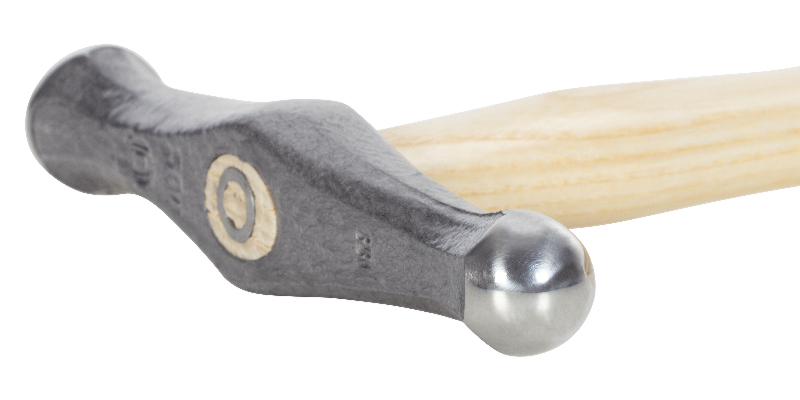
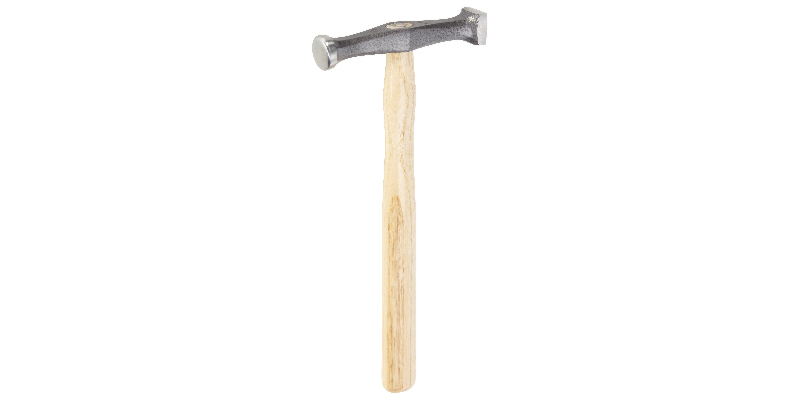
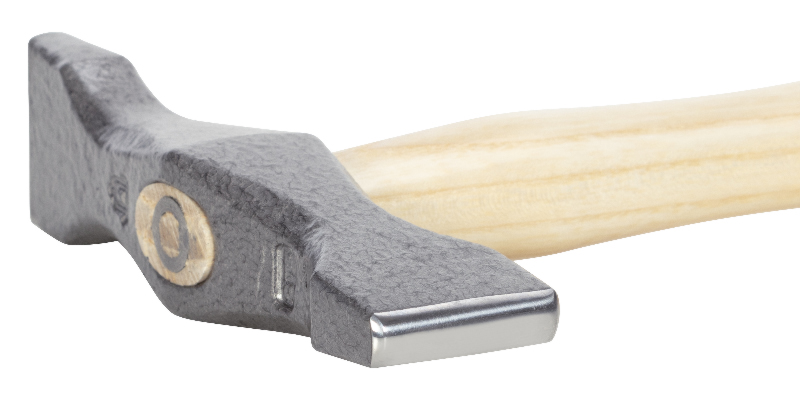
Ball hammer #Varinfo hand-forged, made of tool steel Head length approx. 140 mm, convex side approx. Ø 30 mm, slightly convex side approx. 30x30 mm, Total length approx. 350 mm Features: Made of high-quality tool steel Hand-forged Carefully hardened and tempered Grounded Ergonomic head shape Ergonomic hammer handle One side rounded - convex One side square - slightly convex These special tools are hand-forged to the highest quality standards at the Reisinger forge in the heart of the Lower Mühlviertel region of Austria. ...and for those who would like to learn more about Peter Reisinger and his family business, further information can be found in the "Manufacturer" tab.


fine polished, with ash handle one side square/flat 28 mm, one side square/bowed 28 mm, length of head 105 mm


one side round/flat bowed, one side round/high bowed.


one side round/high bowed, one side round/high bowed.


one side angular/bowed, one side angular/high bowed.


fine polished, with ash handle round/bowed 27 mm, length of head 115 mm


fine polished, with ash handle for silversmiths, one side round/flat 25 mm, one side round bowed 27 mm, length of head 80 mm


fine polished, with ash handle variously bowed peens, one side 18 x 35 mm, one side 22 x 35 mm, length of head 120 mm


fine polished, with ash handle rectangular 100 x 30 mm


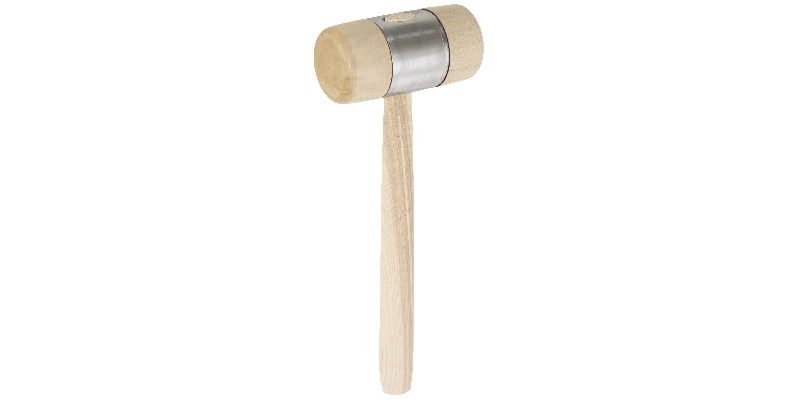
with hammer head made of hornbeam, with convex tracks, Head length approx. 140 mm, diameter approx. 70 mm Head weight approx. 550 g

grey, 500 g This specialized plasticine putty is the ideal tool for learning the fundamentals of blacksmithing. It allows for realistic "dry runs" without the need for a hot iron. When worked, the putty behaves remarkably similarly to glowing steel. This makes it quick and easy to simulate how the material reacts to targeted hammer blows. Whether drawing, upsetting, twisting, or splitting – all classic blacksmithing techniques can be perfectly practiced with this putty before working on a real workpiece at the anvil. Properties: Easy to shape Good forming properties Stable base Easy to shape with a hammer and tools Behavior similar to glowing steel Upsetting, drawing, twisting, splitting, and much more... Not just for cold forging!

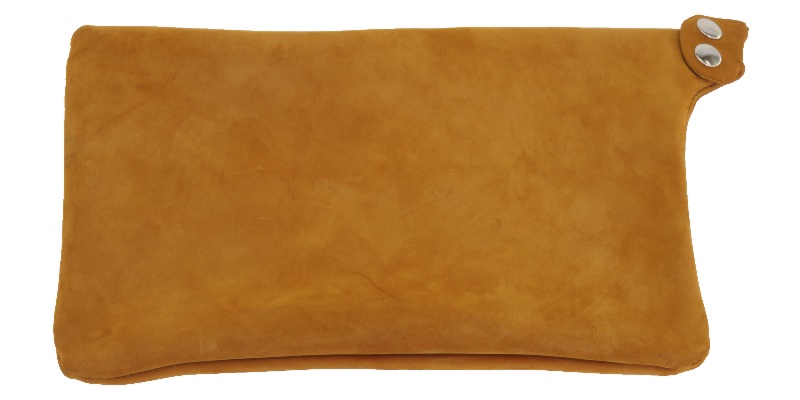
as support for doing repoussé work for sand filling, handmade of best resistant leather, sewed all around on the inside, with press button closing.