
induction coil
Building your own induction coils for the induction device is relatively easy.
It is important to use high-quality components.
For example, poorly conductive alloys on the screw connections can affect the function of the induction device.
For those with experience, a coil that is ideally adapted to the workpiece can be built in around 10-15 minutes.

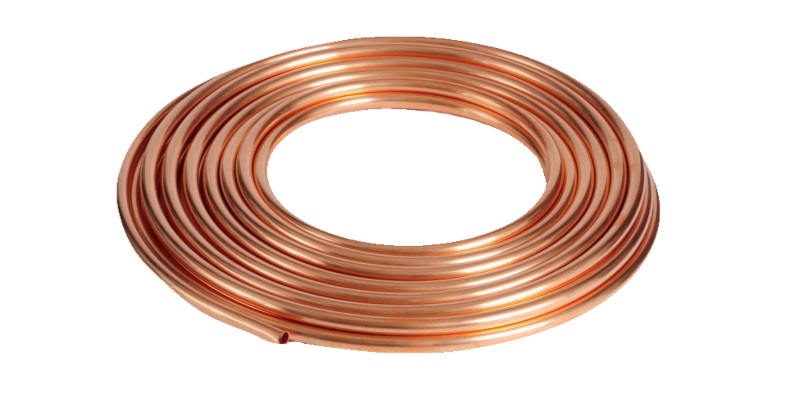
Easily bendable copper tubing, ideal for making inductors. This means that coils for induction devices can be built quickly and easily.


for stainless steel, brass M, aluminium unions The assembly socket is used to pre-assemble the clamping ring and the connecting nut onto the copper pipe. This ensures proper assembly and protects the connections on the device itself. Instructions: Clamp the pre-assembly stud in a vise. Screw on the nut connection. Push the tube into the nut connection. Tighten the union nut approx. 1 1/2 turns with an open ended spanner (mechanical stop). Final assembly in the equipment approx. 1/4 turn. Keep the flat metal surface clean. Occasional lubrification of the thread and the flat metal surface facilitate pre-assembly.

Inside diameter approx. #Varinfo High-temperature-resistant protective sleeve made of fiberglass/glass fiber. To protect the copper tube of the induction coil from slag, sparks or melt. The protective hose is crucial for optimal adhesion of the mortar and prevents the mortar from flaking off prematurely during later operation.


approx. 0,1 mm thick High temperature resistant fiberglass tape. Prevents fraying when cutting the protective hose.

Complete set for building approx. 10 coils This set contains materials to build approx. 10 induction coils: Copper tube Compression rings Connection nuts Mounting studs Protective sleeve for copper tube Fiberglass tape Refractory mortar Quality determines performance: High-quality components are crucial when building your own coils. Lower-conductivity alloys on the fittings (as often found on Far East imports or platforms like Temu, Eba, Amaz., etc.) reduce conductivity and thus the power output of your induction unit, or can even cause permanent damage. We strictly avoid merely "brass-plated" components and rely exclusively on industrial-grade parts from renowned manufacturers. Fast fabrication: With a bit of practice, a coil perfectly adapted to your workpiece can be built in about 10 to 15 minutes. You can find a detailed step-by-step guide above under the "Video" tab.

Refractory Mortar 1600 °C, #Varinfo for "plastering" the induction coil, Temperature resistant up to approx. 1600 °C This mortar is ideal for protecting the induction coil. After covering the copper tube with a glass fiber tube, the finished coil is dipped into the mortar or "plastered" with it. This protects it from slag or melt and significantly increases its service life. Characteristics: high adhesion thin layer thickness (approx.1-3 mm) easy processing high thermal shock resistance max. application temperature approx. 1600°C good resistance to borax or other fire welding agents Scope of application: induction coil Repair work in stoves/hearths Notice: Mixing ratio approx. 250 ml Water per 1 kg Refractory Mortar Attention, our refractory concrete (59104001) is not suitable for plastering the induction coil.